Feasibility & commercial planning
Production assumptions, capacity, yield, CAPEX, OPEX and operating concepts tested before they harden into the business case.
Explore
Indoor Crop Consulting supports commercial indoor farms from early feasibility and facility planning through vendor coordination, commissioning, operations and troubleshooting.
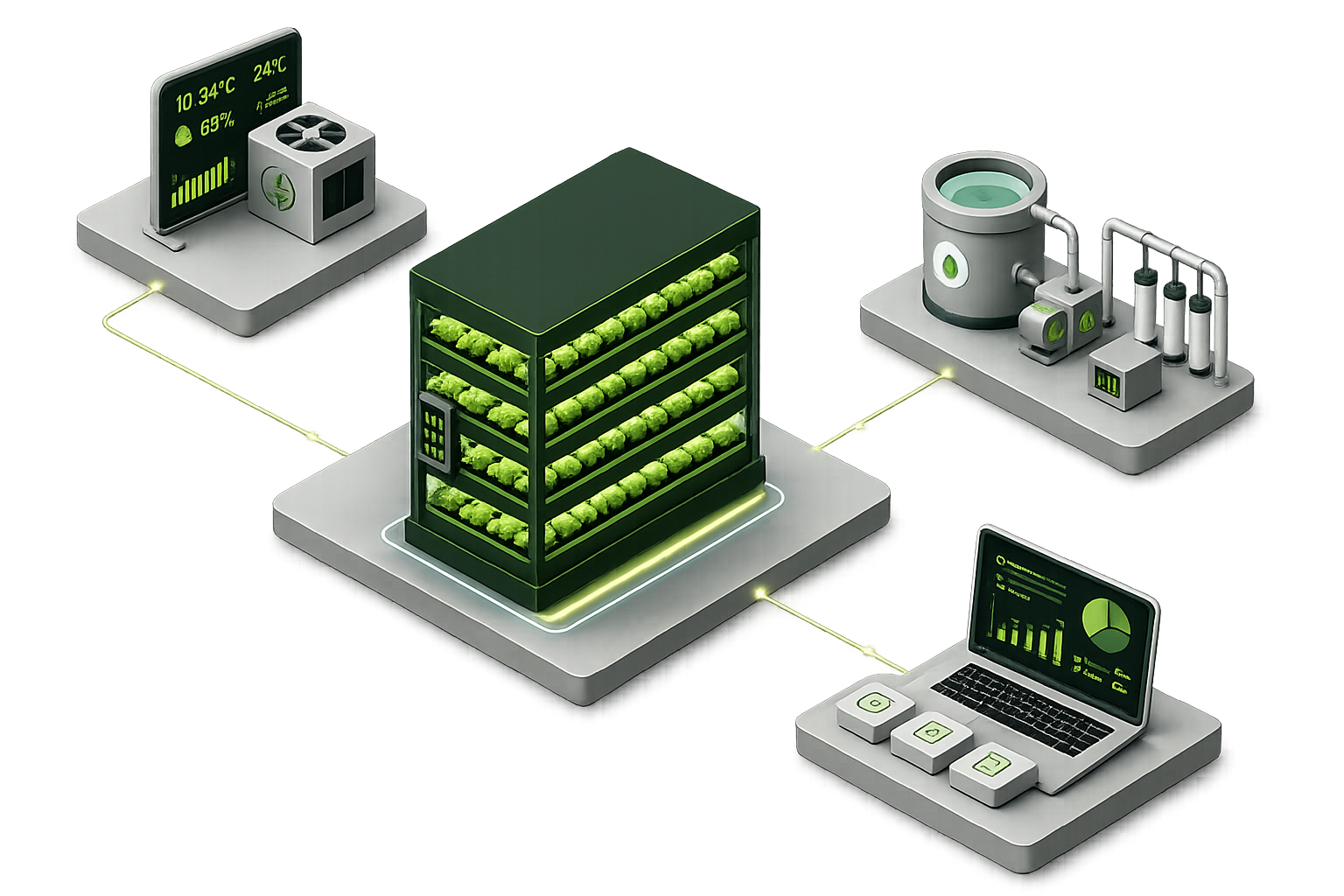
A successful indoor farm is designed not just to grow crops. It must be easy to clean, operate and maintain—enabling healthy crops, consistently high yields and food-safe production year after year.
We work on the owner’s side of the table—helping project teams understand the technical and commercial consequences of their decisions.
Production assumptions, capacity, yield, CAPEX, OPEX and operating concepts tested before they harden into the business case.
ExploreGrow rooms, HVAC requirements, lighting, irrigation, seeding, harvest, packaging and operational flow reviewed as an integrated system.
ExploreRequirements development, supplier engagement, budgetary pricing, proposal review and structured technical challenge.
ExploreTest plans, crop recipes, operational workflows and readiness checks that bridge construction completion and reliable production.
ExploreNearly a decade of hands-on operating experience applied to crop failures, environmental instability, equipment constraints, workflow bottlenecks and performance recovery.
The exact scope varies, but effective projects follow a disciplined path from assumptions to commissioning—and then through the realities of sustained operation.
Clarify project objectives, crop strategy, constraints, available information and the decision that must be made.
Pressure-test yield, throughput, loads, workflows, capital budgets and system interfaces.
Translate production needs into clear requirements for designers, engineers and suppliers.
Build a structured path through functional testing, test grows, ramp-up and performance verification.
Support the operating team through crop and system failures, bottlenecks, performance drift and root-cause troubleshooting.
Assignments span facility redevelopment, production planning, environmental screening, equipment specification, commissioning and operating-farm problem solving.
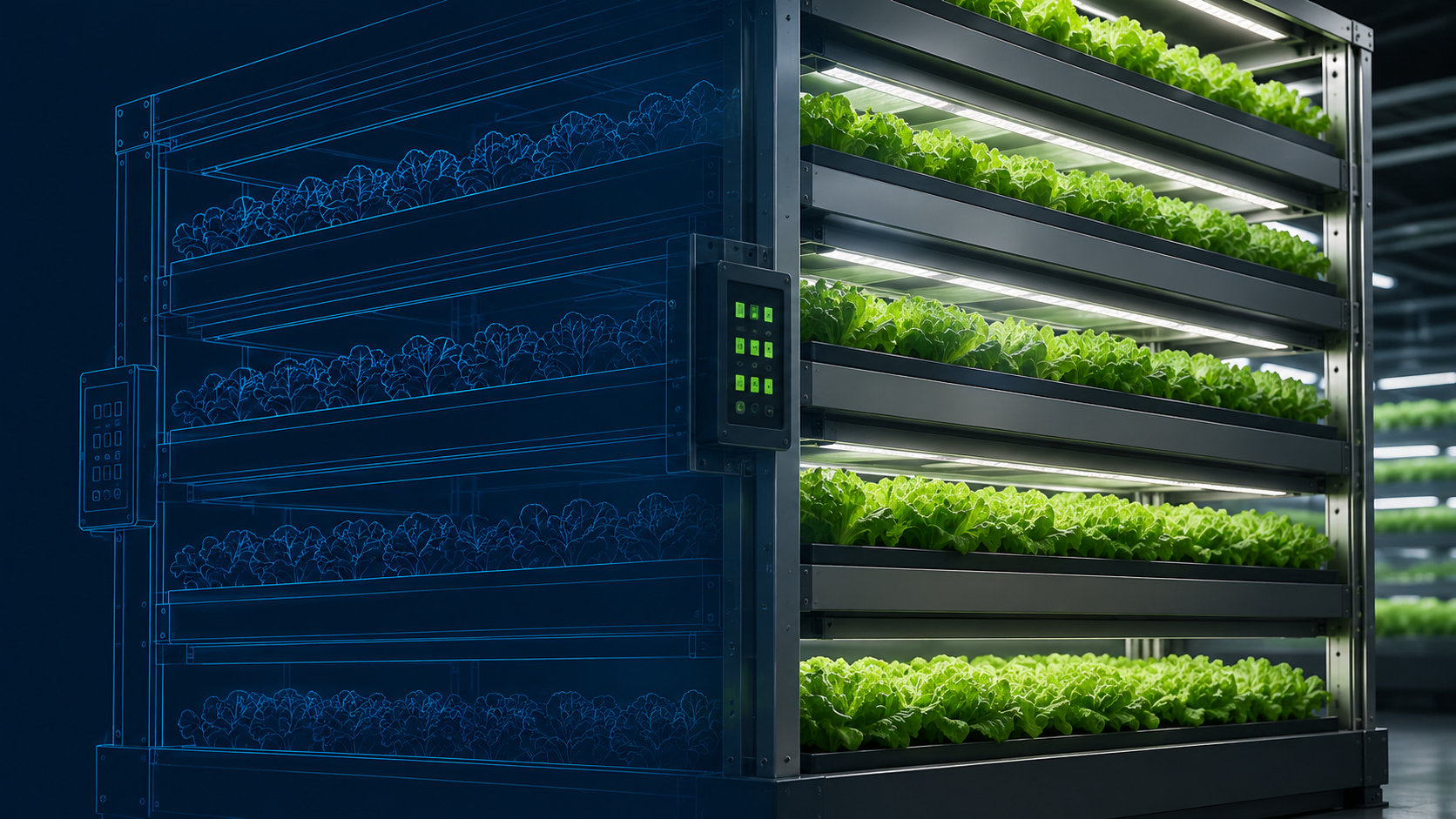
Representative work brings production assumptions, environmental requirements, equipment concepts, operating workflows and capital budgets into one coordinated review.
See engagement typesTranslate crop load cases into practical questions for HVAC engineers and operating teams.
Develop preliminary equipment and workflow requirements from seeding through packing.
Identify omitted scope, reconcile vendor assumptions and strengthen CAPEX decision-making.
Separate symptoms from causes and help operating teams recover crop, system and workflow performance.
Individual suppliers optimize their own scope. Engineers design to the requirements they are given. Operators inherit the result. ICC helps the owner connect those perspectives and expose gaps early.
The objective is not a technically impressive facility. It is a facility that can operate reliably, produce the intended crop and support the commercial model.
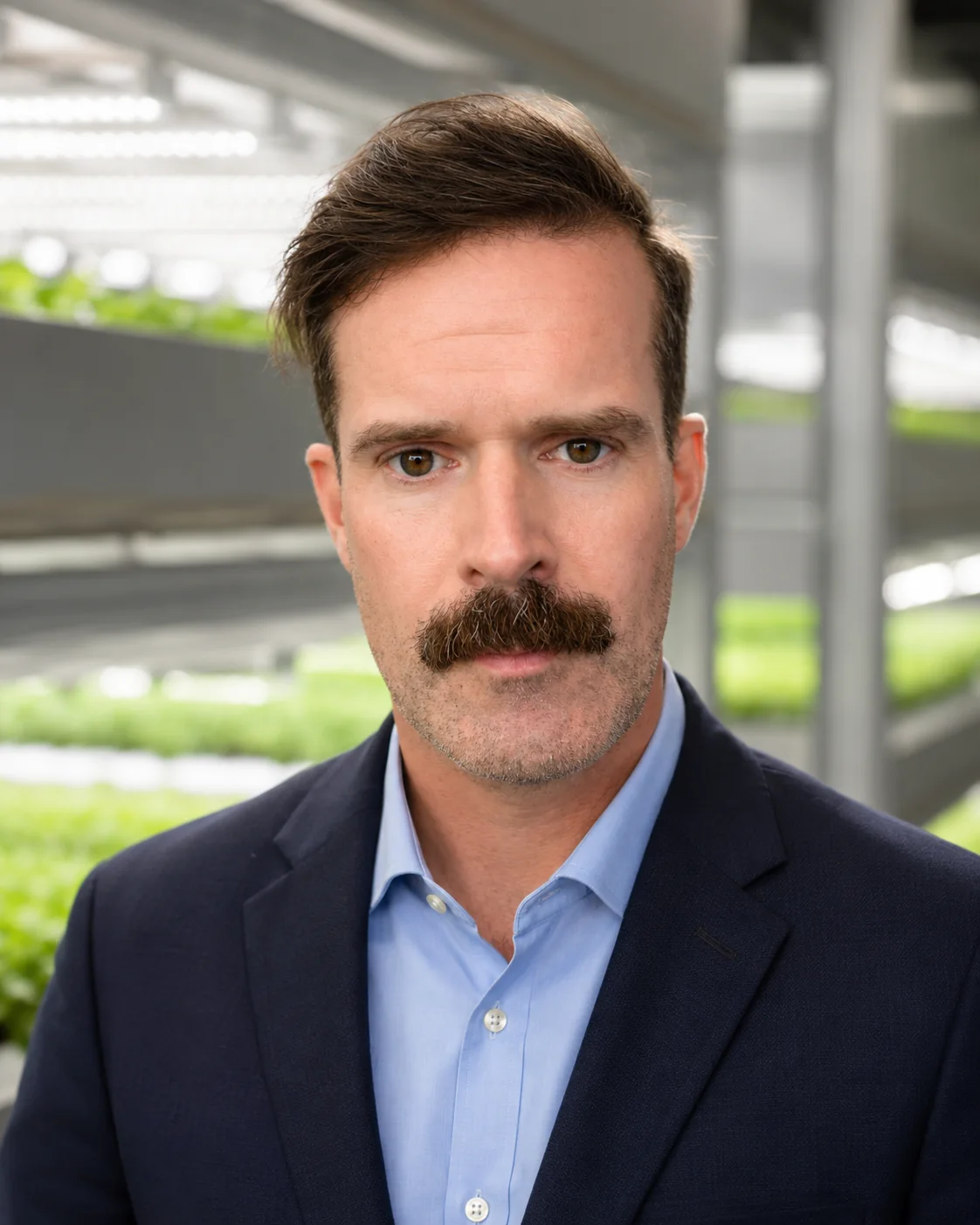
Indoor Crop Consulting was founded by Shawn Woods, bringing nearly a decade of hands-on commercial indoor-farm operating experience to project development and operator support.
The work is focused on the decisions that determine whether a facility can function as intended—and on solving the crop, environmental, equipment and workflow problems that emerge once it is operating.
More about ICCSelected technical resources from recognized industry and research organizations.
ASHRAE explains why crop heat and moisture loads must be included in peak-load calculations to avoid undersizing environmental systems.
Read sourceWageningen University & Research provides practical guidance on crop strategy, cultivation conditions and resource flows in vertical farming.
Read sourceUSDA Economic Research Service reviews investment, technology adoption, production trends and the economic context for CEA.
Read source